ESRIC selects projects for Start-up Support Programme
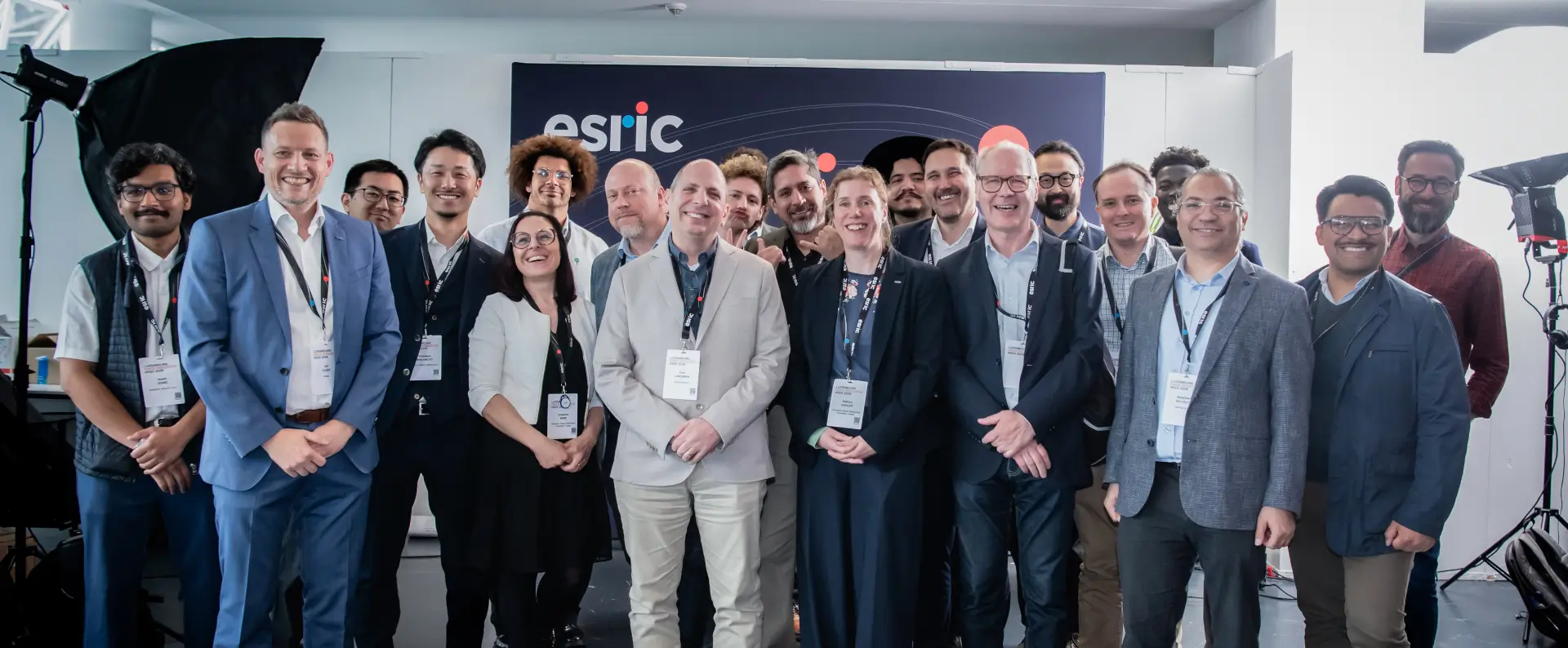
The European Space Resources Innovation Centre (ESRIC) has announced seven projects for Phase I of the 6th batch of its Start-up Support Programme (SSP).
19/05/2026
Run in partnership with Technoport, SSP is the world’s first international Incubation Programme dedicated to space resources technologies and continues to grow a strong and diverse ISRU (in-situ resource utilisation) ecosystem, which now includes a portfolio of 25 projects.
Following a competitive selection process, seven early-stage ventures from across Europe, Asia, and North America have been selected for a three-month remote preincubation phase. This international cohort reflects the global momentum behind space resources, with selected projects headquartered in Austria, India, Italy, Japan, Luxembourg, South Korea and the United States.
The strong representation from Asia, with projects from Japan, South Korea, and India, highlights the increasing engagement of these countries in the development of space resources technologies and opens the door for further international collaboration.
During Phase I, the selected teams will receive in-kind support from leading international experts across business, technical, and commercial domains. The objective is to help de-risk their use cases and prepare them for the next stage of development. At the end of this phase, one or more projects may be selected to advance into Phase II and establish a deep-tech venture in Luxembourg.
The selected projects cover a wide range of technologies critical to future space exploration, including autonomous robotics, excavation systems, optical communications, advanced materials, and in-space logistics.
The seven selected projects for SSP Batch 6, Phase I
- Aureon Space Systems (Japan) - Developing a novel approach to mass propulsion and in-situ resource extraction by melting asteroid material and using it to generate thrust, enabling large-scale resource return without carrying propellant from Earth.
- Base and Power City Corp. (South Korea) - Designing an autonomous robotics platform that coordinates multiple robotic agents for construction and infrastructure deployment in resource-constrained environments.
- NaubotiX SARL (Luxembourg) - Providing a platform-agnostic module for robust, safe, and AI-driven robotic operations in both terrestrial and off-world environments.
- SatEnlight (Italy) - Delivering high-capacity, secure optical communications using orbital angular momentum to support data-intensive and autonomous ISRU operations.
- Torres Orbital Mining Inc. (USA) - Developing autonomous, dust-preventive excavation systems for extreme environments, combining robotics and AI.
- Tumbleweed (Austria) - Offering return services for in-space manufacturing through pre-certified payload containers and a proprietary returnable satellite architecture.
- Uncharted AI (India) - Building AI-driven robotic systems that provide real-time mineral intelligence in harsh, GPS-denied environments on Earth and in space.