How IP agreements help research spin-offs attract investment
At Luxembourg Venture Days, experts discussed how faster intellectual property agreements help research spin-offs attract investors and reach the market.
05/11/2026
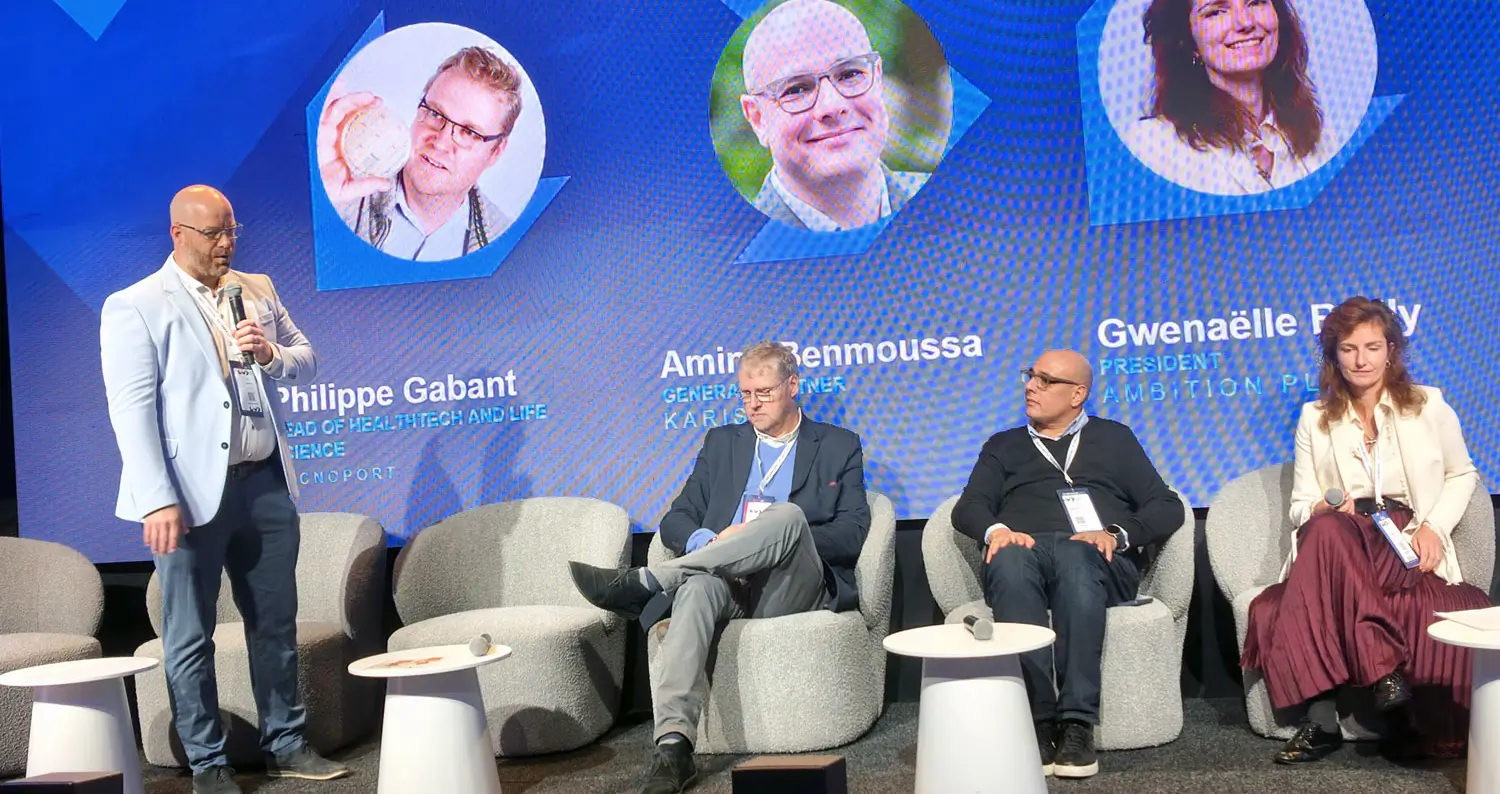
Research spin-offs face a recurring challenge: securing intellectual property (IP) agreements that recognise the contribution of research institutions while giving the startup enough freedom to attract investment and reach the market. At Luxembourg Venture Days on 14 October, Philippe Gabant of Technoport (Luxembourg technology business incubator), Amine Benmoussa of Karista (a French deeptech venture capital firm) and Gwenaëlle Bailly of Ambition Plus (a deeptech business adviser firm) discussed how researchers, investors and institutions can structure licence terms that work for everyone. Philippe Grother of Unknown Labs (a spectroscopy hardware and cloud analytics company) moderated the panel.
Why patenting is the first step to commercial use
For Philippe Gabant, protecting an invention began with the possibility of putting research to practical use beyond the laboratory. A patent and licence helped connect his team’s scientific work with people working in laboratories.
“The main focus was for us to impact the external world with our science.”
Mr Gabant also highlighted that patenting can bring a long-term commitment. Inventors may remain involved in patent examination and, if infringement occurs, legal proceedings. A licence therefore represents an important step in a much longer journey from research to commercial use.
Faster IP negotiations help startups raise funding
Gwenaëlle Bailly said time is a critical issue for startups. Founders need to build a business and raise funding, while licence discussions between startups and institutions can take months or longer. That uncertainty can make it harder to reassure investors and move towards the market.
“We need to have the same alignment between startups and investors and institutions to make a startup scale.”
Her advice was to keep negotiations focused on what the startup needs to move forward. Early-stage teams may not yet have enough market evidence to establish a precise value for their IP. Rather than prolonging discussions around uncertain valuations, the parties can aim for terms that let the company develop its product, speak to customers and raise investment.
Structuring licence terms investors can accept
Amine Benmoussa said investors consider IP alongside technology, commercial and financing risks. He recognised that universities and research centres should benefit from the work they support. Royalties or payments linked to future sales can be acceptable, provided the terms are clear and do not block future investment.
Some arrangements, however, can make later fundraising harder. Mr Benmoussa pointed to evergreen anti-dilution clauses that could preserve an institution’s shareholding regardless of how much the company raises. Investors may be reluctant to accept terms that could deter future investors. He also underlined that technology transfer offices create value for their institutions, but should not be mistaken for investors in the spin-off.
“IP is a requirement for us to build great companies.”
The discussion underlined the value of involving investors early, before difficult terms become obstacles to fundraising. Researchers, institutions, startups and investors can use those conversations to understand each other’s responsibilities and agree on a path that supports both the venture and the institution.
Diversity strengthens spin-off teams and investor appeal
The panel also discussed diversity in research and entrepreneurship. Ms Bailly encouraged ecosystems to welcome people with different backgrounds and ways of thinking. Mr Benmoussa urged successful women entrepreneurs to share their experiences and inspire younger generations. Mr Gabant highlighted the importance of learning from other cultures and perspectives.
Mr Grother closed the discussion by noting that diverse teams can strengthen a company’s investment appeal. For research spin-offs, an open ecosystem can help challenge assumptions and support stronger ventures.
Luxembourg Venture Days returns in 2027. Visit the registration page to stay informed about upcoming opportunities to connect with investors, researchers and entrepreneurs in Luxembourg's startup ecosystem.
Patent: A legal right that lets the holder stop others from using, making or selling a protected invention. It generally lasts 20 years from filing.
Licence: A contract that lets another party use a patented invention under agreed terms, usually in return for royalties. The patent owner keeps the patent.