Fintech funding & AI: 4 lessons from Luxembourg Venture Days
At Luxembourg Venture Days, three investors explain how AI accelerates fintech growth, transforms deal sourcing and why human expertise, proprietary data and teams still matter.
23/11/2026
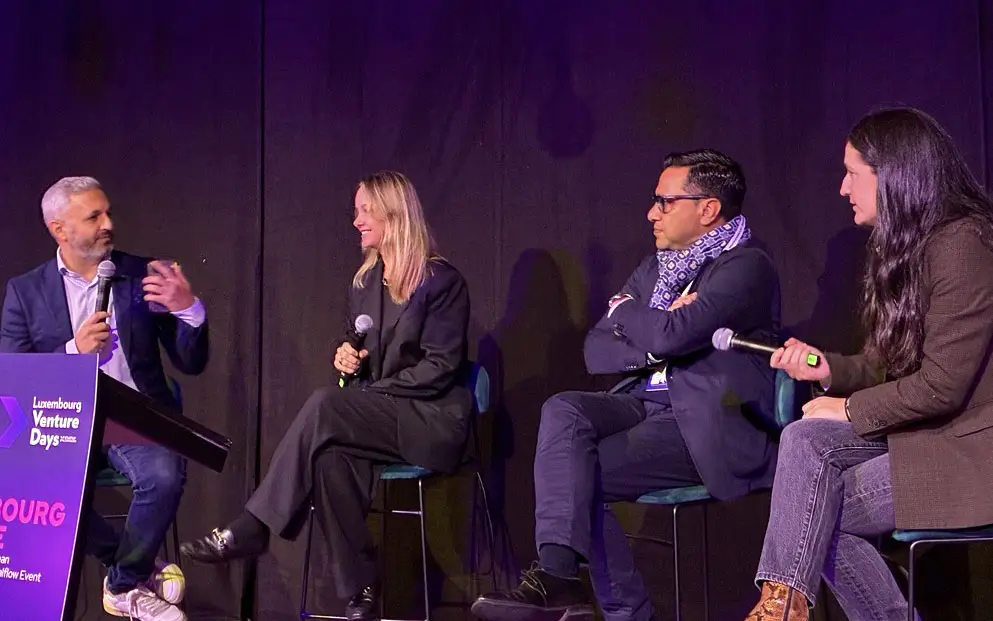
AI is accelerating fintech growth and transforming how investors source deals, but it does not replace proprietary data, regulatory expertise or a strong founding team. That was the shared conclusion of three investors speaking at Luxembourg Venture Days on 14 October during a panel moderated by Alex Panican, deputy CEO at the LHoFT. Three experts discussed how artificial intelligence reshapes both startups and the venture capital process in fintech.
How AI changes fintech due diligence and deal sourcing
"Venture capital is ultimately a people business, and we now have more time for it", said Pauline Brunel, Director at Blackfin. In her firm, a screening engine analyses public and private data, so the team spends less time on slides and sourcing and more time with founders. The decision itself stays human: "We don't rely on AI to invest."
The effect on startups is striking. A Series A company with €1 million in annual recurring revenue (ARR) used to be the comfort threshold. Ms Brunel now sees companies reaching €500,000 after six months and €1 million after one year. "You build faster, you go to market faster, you demonstrate ROI faster to your clients, and you can integrate faster as well", she explained.
Shanu Sherwani, Chief Investment Officer at Kneip Management, confirmed that development costs fell at companies in his portfolio, such as Next Gate Tech. He questioned shorter sales cycles, however. "Every company needs at least 6 to 12 months until you put pen to paper and sign an agreement", he said.
Proprietary data and teams: what AI cannot replace
Lower barriers to entry make copycats easier, and many pitch decks now look alike. "We need to go back to the basics and understand what is behind the answer", said Bozena Adamczyk, Partner at Truffle Capital, who looks for solutions that AI cannot replace in the future. She points to proprietary data, regulatory licences and distribution through large banks, which take time to build but create lasting barriers. The team matters too. Truffle Capital, which recently invested in Luxembourg-based Hydrosat, still backs one-person companies, but she prefers "a team that can challenge itself, for governance reasons".
Mr Sherwani gave an example. Afriwise, a legal tech company, spent eight years collecting legal data across African countries. "They can't compete with the large AI developers on technology, but they can compete on the data they have", he said. He added that expertise remains essential: "AI will not do the fund oversight. It's very complex."
Longer exits and a local challenge for Luxembourg fintechs
Holding periods are increasing, but not because of AI. "It's linked to the uncertainty in the market, which makes exits harder", said Ms Brunel, adding that this applies to private equity as well as venture capital. Ms Adamczyk expects exits after 6 to 7 years, while Mr Sherwani invests the family office's own money with a horizon of 5 years.
Mr Sherwani also pointed to a local obstacle. "Our fintechs are super, but they don't get a meeting at a bank to pitch their company", he said. In Singapore, he noted, local banks have to work with fintechs and receive a tax break, which Luxembourg does not offer.
How fintech founders should approach investors
All three panellists favour early, direct contact. "We like to be in touch with founders even before they start raising", said Ms Adamczyk. Ms Brunel recommends an email followed by an introductory call or a coffee. She explained that her AI tools scan LinkedIn only to spot growth signals such as hiring. Mr Sherwani is more direct: "You just email me." His team receives two to three applications a week and answers within two to three weeks.
His best advice for founders: "Focus on your core business and don't start different business lines." Setbacks are part of the journey, he added: "A failure is something you learn a lot from."
Register to Luxembourg Venture Days 2027 to keep track of startups' investments.