
AIRMO's methane-detecting satellite on its way to a 2027 launch
The Luxembourg-based deeptech startup plans a Q4 2027 satellite launch to deliver methane intel at scale but is already delivering value long before lift-off.
 Abigail Okorodus Okorodus
05/11/2026
Methane is a natural gas widely used for heating and electricity, but its environmental impact is severe. It is 86 times more potent than carbon dioxide (CO2) in terms of global warming, yet global emissions are severely underreported, running about 80% higher than official figures according to the International Energy Agency's 2025 tracker. Based in Luxembourg and Germany and growing rapidly across Europe and the Middle East, AIRMO designs, builds and operates proprietary sensors that measure methane emissions directly.
Unlike CO2 mitigating methane is often as simple as closing a valve or plugging a leak. What's missing and more difficult, explains Daria Stepanova, CEO and co-founder of AIRMO, is a cost-effective, reliable system that can deliver transparency on methane emissions at a global scale.
While the company's ultimate product, a satellite designed to detect and measure facility emissions from orbit, won't be fully operational until its launch in the fourth quarter of 2027, AIRMO found a clever way to enter the market early. Today, the startup is already flying its sensor suite on drones and aircrafts to provide immediate emission-detection and quantification services to clients on the ground. It also already processes available third-party satellite data, giving clients broader coverage ahead of AIRMO's own satellite launch.
From drones to orbit
 The company flags super-emitters, tells operators exactly which facilities to inspect and supports regulatory compliance. Its clientele includes oil and gas operators, pipeline operators and utilities, regulators, verifiers and asset managers who require auditable numbers. A customer commissions a flyover and AIRMO sends back the data.
But airborne monitoring has a ceiling. “Coordination of these commercial campaigns takes a lot of manual work,” underlines Ms Stepanova. “The further we go from our base, the more expensive it becomes.”
With a satellite in orbit, the company will gradually achieve true global scale. Built in partnership with Bulgarian manufacturer EnduroSat, the satellite will enable worldwide emissions tracking. “Within several days we can fly over any facility and perform a measurement,” notes Ms. Stepanova,
Getting there means proving the hardware first, and a closer proof came in late August. AIRMO flew near-identical twins of the satellite payload on a high-altitude aircraft, a final stress test ahead of locking in the design for launch. “We're very excited to test all the instruments together,” she adds.
Engineered to be different
The company’s hardware tech stack is unique. “It consists of three modules and two of them are first of a kind,” mentions Ms Stepanova. One of these is a compact and cost-effective short-wave infrared imaging spectrometer that can detect methane from 500 kilometers up with a resolution of about 50 meters. It takes direct inspiration from TROPOMI, the SWIR push-broom spectrometer flying on the European Space Agency's Sentinel-5P mission, but in a smaller and leaner version.
“The bigger versions were launched by global agencies like the European Space Agency (ESA) and NASA, but we are the first ones to miniaturise it to small sat form factor,” she states.
The second is its LiDAR system pioneered for space. It enhances detection accuracy and sensitivity beyond what spectrometers alone can achieve. Paired together, the two instruments allow for atmospheric reading with much greater precision. “We are able to outcompete the market in terms of accuracy, reliability and, ultimately, as we're feeding the small satellite platform, cost,” she points out.
Funding a deeptech bet
Turning that hardware into a flight-ready product required funding to match. AIRMO secured €5.2 million in pre-seed funding in 2023. This financed its aircraft-ready demonstrator and helped secure its first industrial and institutional customer commitments. It has since gone on to complete projects with the likes of the ESA and the Luxembourg Space Agency.
A further €5 million was raised in 2026 through a seed round led by Ananda Impact Ventures, earmarked for the satellite launch and the commercial data delivery that follows. A Series A round is planned once the satellite is in orbit, giving AIRMO a live product to raise against.
When fundraising, “persistence and resilience are the most important factors,” explains Ms Stepanova, adding that building investor relationships long before an active raise matters just as much.
Winning trust across industries
The European Methane Regulation came into force on 5 August 2024, part of the EU's 'Fit for 55' package aimed at cutting greenhouse gas emissions across the bloc by at least 55 per cent by 2030. AIRMO has engaged with government representatives in Germany, as well as in Northern Africa and Central Asia, as regulatory pressure builds.
Alongside national authorities, the company’s clientele includes major energy operators like Uniper and TotalEnergies, alongside the environmental group Greenpeace. Increasingly, financial institutions are also part of the mix. “We realised that if you want to work in energy, you also need to work with financial institutions because they are an enabler of the energy sector, especially true when it comes to financing the energy transition in emerging markets.” says Kristina Lugovenko, Business Developer at AIRMO. Being based in Luxembourg, the world's second-largest investment fund centre, provides a natural pool of financial institutions to work with. The company recently closed a six-figure contract with its first customer from that group.
Doubling down in nine months
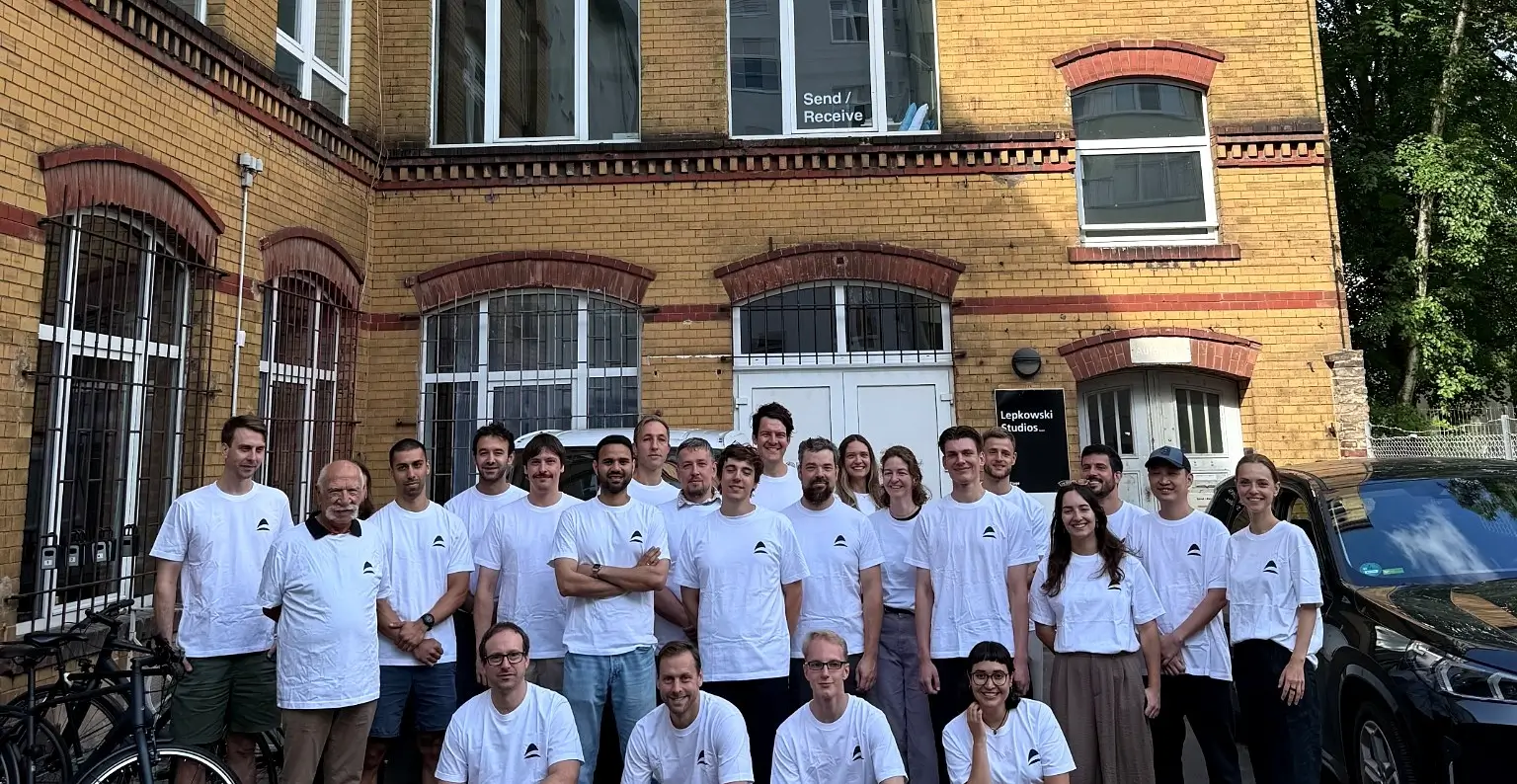
In January 2026, AIRMO joined Fit for Scale, a new accelerator for ambitious companies expanding across Europe. Since then, the team has doubled from 15 to 30 people. It brings together specialists in lasers, optics, energy markets and regulation, an achievement Ms. Stepanova considers the company's proudest milestone. Alongside this rapid growth, AIRMO has signed contracts in five new countries.
The decision to join Fit for Scale was deliberate. “We wanted to learn from experts on how to enter the scaling phase,” notes Ms Stepanova.
Under the programme's one-to-one mentorship model, company representatives worked hand in hand with a specialists suited to their needs. The Luxembourg country lead worked closely with lead mentor Christophe Bianco, co-founder of Excellium Services, now part of Thales. The marketing team refined its social media and positioning strategy with external coaches. Engineering and go-to-market did the same, each pairing separately. Along the way, steering committee sessions became recurring chances to meet investors ahead of the planned Series A.
“It has been a very valuable experience and given us a new perspective on how to present our product,” concludes Ms Lugovenko.