
Five mistakes that quietly kill social ventures
Social entrepreneurship in Luxembourg is growing, but the ideas outpace the models. Two practitioners explain where early-stage founders most commonly go wrong.
 Abigail Okorodus Okorodus
06/07/2026
It usually starts the same way: someone has spent months thinking about a problem they care about, sketched out a rough idea on a napkin or a notes app, and feels ready to build something real. Then comes the harder part: figuring out where to actually begin.
In Luxembourg, social entrepreneurs occupy a specific space. They are building organisations that need to survive financially like any business, but whose success is measured in impact rather than profit alone. That dual mandate makes the early stages harder, not easier, than a conventional startup.
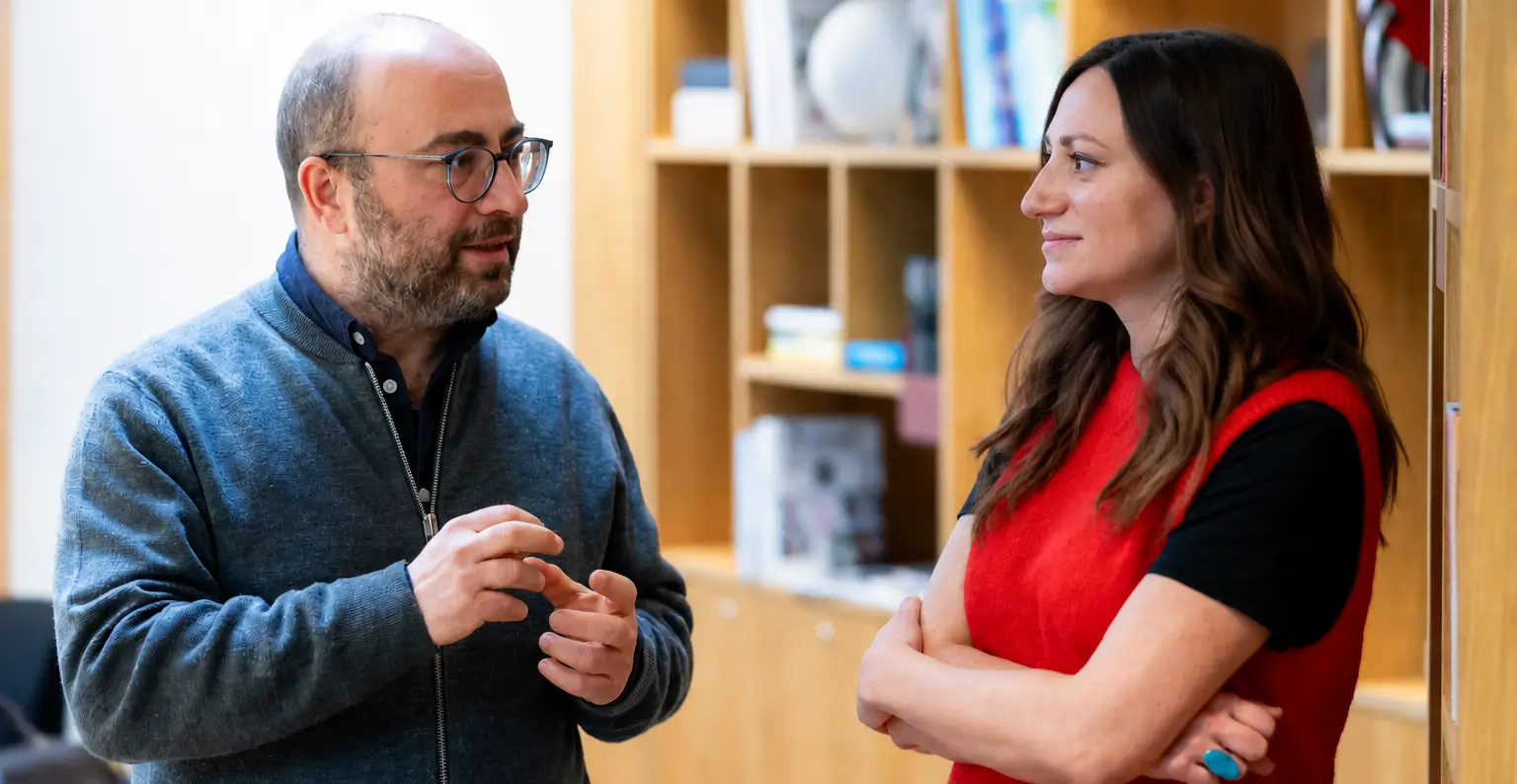
Guylaine Marchi Hanus, founder of entrepreneurs’ network EIS Luxembourg, and Renato Fontana, co-founder & soft skills trainer at Talentivo.lu, a Luxembourg-based people development consultancy, point out five mistakes that come up repeatedly:
“We will apply for grants.”
Grants are fragile. They rarely cover everything, and they come with cycles, conditions and deadlines. Treating them as a core revenue stream leaves a venture exposed the moment the funding runs out.
“We serve everyone.”
Trying to help everyone can seem generous, but it makes your mission weaker. Somewhere along the way, founders need to choose a specific group to design for.
“The mission justifies the model.”
Doing good is not the same as being sustainable. A project can have an impact but still not be able to sustain itself after the first round of funding.
“We will figure out revenue later.”
You need to think about how you will make money from the start even if it's just a rough idea. If you add it later, it feels like an afterthought.
“We need a business plan first.”
Writing a plan before testing your ideas can lead to surprises. A business plan that is written early is just a guess, not a real strategy.
The most common trap: grants as a strategy
Of the five, the grants mistake stands out. "So many wannabe social entrepreneurs believe their model will automatically be sustained by public grants," says Ms Guylaine. "It is a leverage, but it is not sufficient." Reviewing the business models of organisations listed in the Impact Luxembourg directory, Mr Renato found that hybrid models in Luxembourg were now gradually becoming a norm. Most organisations combined several revenue streams, typically B2B services alongside donations, product sales or memberships, while grants were used as complementary funding rather than a standalone business model.
The deeper issue, however, is structural. Entrepreneurial education, Ms Guylaine argues, has not fully crossed into the social sector. "Cross-pollination between the social world and the business world is only starting to exist. We need to build bridges, because that business mindset is necessary to succeed, even when the mission is social."
Mr Renato points to a different force pushing revenue to the bottom of the list for social entrepreneurs. "There is a psychological aspect to this because pricing touches something personal: your own sense of value. Sometimes the entrepreneur does not separate the two." For Ms Guylaine, it is also a knowledge gap. "The social mission becomes so important that the financial dimension gets underestimated. But the two are codependent. Without resources, the model cannot be sustainable."
The sequence that actually works
Most early-stage social entrepreneurs don't fail because their idea is bad. They fail because they skip or mix up the steps that should turn that idea into a business.
To start right, both founders propose the following steps:
- Clarify the mission. Define your purpose and the specific community you serve. Not a broad group, but real people with real problems.
- Fill the social business model canvas. This robust tool helps social enterprises map the value proposition, the stakeholders, impact and the channels in advance.
- Test assumptions. Run pilots to validate ideas. Talk to users and listen to their feedback.
- Draft the business plan. Only write your plan when you have tested your ideas and have a path forward.
The Luxembourg dimension
Social entrepreneurship is still a relatively young ecosystem in Luxembourg with around 90 registered Social Impact Companies. Both practitioners believe that is precisely why the opportunity is so significant.
As the world faces social and environmental challenges, social enterprises offer a different approach: combining business methods with social impact while building organisations that can sustain themselves. Encouraging more people to think this way is ultimately about the future. “If there are no entrepreneurs who come with a social dimension, who will build our societies?” Ms Guylaine asks. “Social entrepreneurship is also a civic act,” Mr Renato concludes.