Expanding a Luxembourg startup to international markets
Daniel Stoica explains how RMT Labs and Skillbourg used Luxembourg's ecosystem to expand internationally, exploring markets in Europe, the UK and the UAE.
24/06/2026
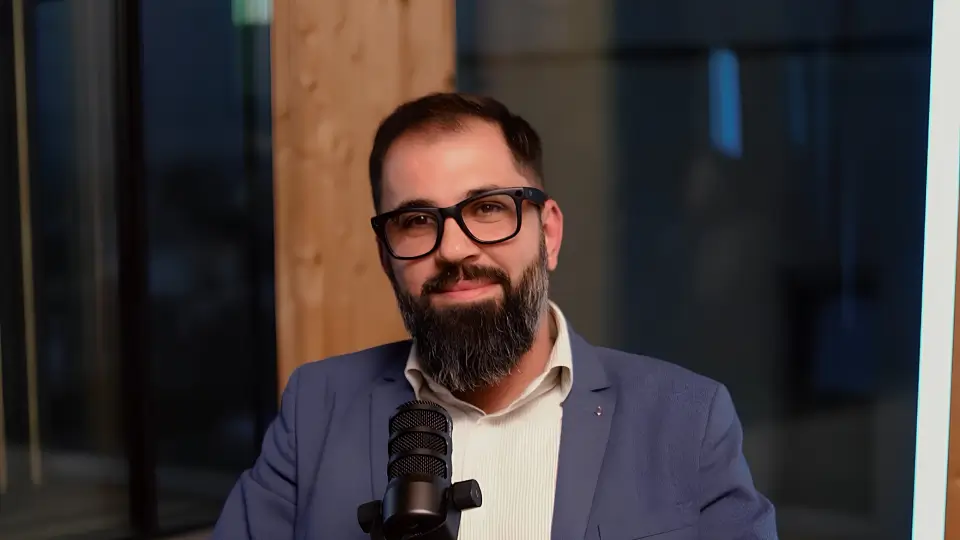
Daniel Stoica, founder and CEO of RMT Labs, built his startup on experience from both IT and recruitment. With RMT Labs’ product Skillbourg, a talent intelligence platform for employers and job candidates powered by AI, he set out to address inefficiencies he had observed firsthand. The platform aims to streamline the hiring process by automatically matching candidates and roles based on skills, experience and practical constraints such as location or availability.
“I was working as a recruiter for more than five years and it became very clear that we are ages away from where we should be,” he recalls. This realisation led him to start his company in Luxembourg, convinced that “there is a huge gap in the market.” From the beginning, the ambition was not limited to one country, so early on RMT Labs began exploring opportunities beyond Luxembourg, testing ideas and learning from different markets along the way.
Exploring international markets from Luxembourg
Luxembourg offered a strong starting point, but its size required Mr Stoica to look outward early on. He focused on understanding how recruitment challenges differ across countries.
“I went to all these markets to understand where the problems are,” he explains. This approach took him across several European countries, as well as the United Kingdom and the United Arab Emirates, always with a learning mindset.
For Mr Stoica, data alone is not enough. “If we want to understand the market, we need to understand the culture of that country,” he says. This meant looking beyond numbers to study how companies operate, make decisions and structure their hiring processes.
Building direct client connections in new markets
Instead of relying on intermediaries or local partners, Mr Stoica chose to build relationships directly. “I built the connections myself,” he says, emphasising a hands-on approach backed by his previous experience with companies across Europe, the Americas and the Middle East.
Meeting clients and stakeholders in person became a key part of this strategy. In some cases, a short visit was enough to gather valuable insights. “I was having 12 meetings in five days to understand what we need to bring to a specific market,” he recalls. These early conversations helped the company refine its understanding of different markets and identify where its solution might fit.
Adapting a startup to different business cultures
Operating across borders quickly highlighted how important cultural awareness is in business. Originally from Romania, Mr Stoica brings experience from a diverse background, which has shaped his approach. “You do not work in Germany the same way you work in Romania,” he notes. He also points out that in Luxembourg, different approaches meet in the same ecosystem, explaining that “the German style is very different from the French style, so you need to accommodate both.”
Adapting communication style is therefore essential. In some markets, a direct approach can be an advantage. “In Germany, they like things to be very direct and very simple,” he explains, noting that using the wrong style can risk losing opportunities, “if you go with a different style, then it can fail.”
More broadly, success depends on understanding how people operate in different environments. As Mr Stoica summarises, “you need to understand the way companies work and the culture of the people.”
Luxembourg's startup ecosystem as a launchpad
While international exploration is key, Mr Stoica highlights that Luxembourg and its startup ecosystem remain central to the company’s development.
I truly believe that Luxembourg is the best country in the world to develop a business.”
Daniel Stoica, RMT Labs
“Luxinnovation played a huge role because I connected with them from the beginning and they guided me,” he says. Early advice and clear direction helped him understand funding options and structure his approach. As he puts it, “Luxembourg is telling you exactly what you need to do.”
Beyond funding, collaboration with research partners added another dimension. Working with the Luxembourg Institute of Science and Technology (LIST) allowed the company to deepen its technical capabilities.
Access to MeluXina, Luxembourg’s supercomputer, was another important advantage, not readily available to startups in many other places. “The ecosystem in Luxembourg made it very easy,” he adds. This supportive environment also helped attract international talent and build a diverse team.
Reflecting on the journey so far, Mr Stoica emphasises continuous learning. “As a businessperson, you grow. You are not born an entrepreneur,” he says. For RMT Labs, the focus remains on progressing step by step, combining technology, market understanding and human connection as the company continues its international path.