“Anyone can invest in the future”: Emma Scribe
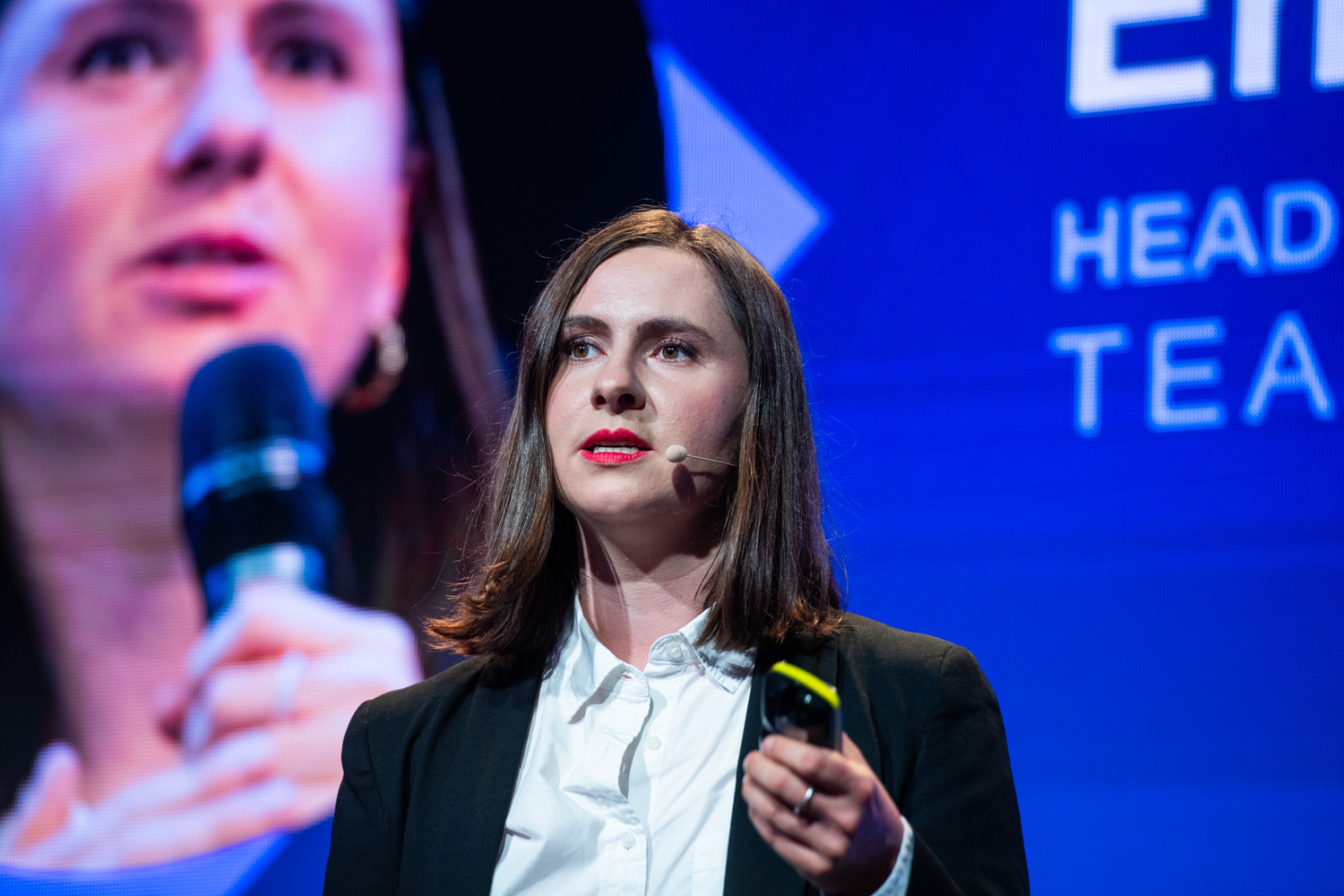
Emma Scribe, Head of Major Investors at Team for the Planet, explains how a citizen-funded climate fund works, and why one euro can be enough to join.
 Abigail Okorodus Okorodus
11/11/2026
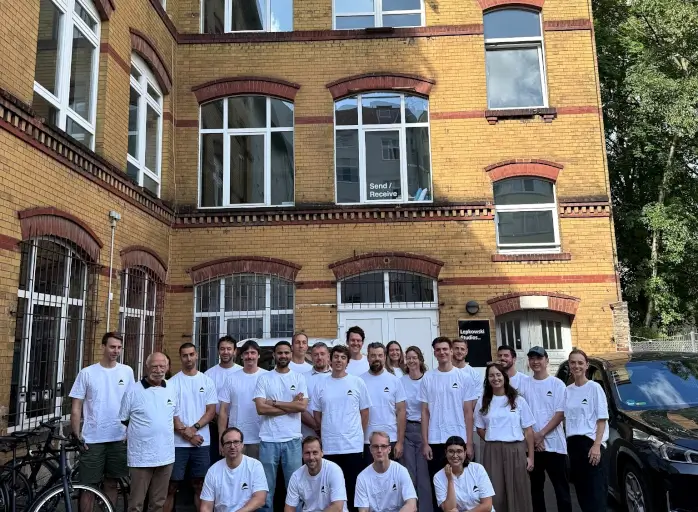
Emma Scribe is Head of Major Investors at Team for the Planet, a global citizen movement that pools small and large investments to back innovations cutting greenhouse gas emissions. Since its launch six years ago, it has grown to more than 135,000 shareholders, from individuals to over 4,000 companies. She sat down with Startup Luxembourg after Venture Days to talk about opening finance to everyone, the role of women in impact investing, and what it takes to earn the trust of large investors.
How would you explain Team for the Planet to a five-year-old?
It's a giant piggy bank dedicated to creating better living conditions on Earth. It invests in products and services that use less carbon to be made, the stuff that makes the Earth go warmer. And because the piggy bank is so big, many different people can put money in. We are a citizen movement, with people from Brazil, Kenya, New Zealand, India, anywhere in the world. Climate change happens in every country, so we wanted this to be completely global.
Why did you join?
I realised quite late in life how massive the problem was. Once I understood it was the most critical issue of the 21st century, I wanted to dedicate all my energy to it. What I find beautiful about Team for the Planet is that anyone can take part from one euro, and with that very micro contribution you act on something very systemic. That link between the micro and the macro is what we have built.
I also believe finance has traditionally been reserved for a specific part of the population. When you see how powerful your savings can be, you want to open that up. So anyone can invest a small part of their money in the things that will make a beautiful future emerge.
Based on your job title, who are the "major investors", and how does a citizen join?
My title probably needs to change (laughs)! The vast majority of shareholders are individuals, but more than 4,000 companies have invested too, from SMEs to major groups. We have family offices, entrepreneurs who have sold their companies, and family-owned businesses that want to allocate a specific amount to this kind of project. A civil society has companies, NGOs, sports clubs and individuals, and we want to reflect that.
For citizens it is simple: you sign up online, subscribe to a share, and become a shareholder. It takes about three minutes.
What do shareholders get back? Does it work as a normal investment?
We wanted to decouple the money shareholders make from the money the portfolio companies are expected to generate. Deep tech needs to be free from short-term pressure, and when we started six years ago we had no idea how long these companies would need to flourish. If you owe shareholders a return, you systematically pick projects that pay off quickly. Our mission is to decarbonise at global scale, so we wanted to maximise that.
So a share is revalued every year, based on the financial value of the portfolio and the tonnes of CO2 it avoids. The formula was validated by shareholders in a general assembly, and the carbon price comes from a French Ministry of Economy report on what a tonne of CO2 costs society. This is the first year we apply it: the new share price will be announced on the 24th of November, during our annual party. There is a secondary market where people can sell to other shareholders, and just over €100,000 has changed hands since March. There is no guaranteed return, and all carried interest is reinvested in new companies.
How does a crowd of non-experts know what is worth backing?
By design, they never have to decide alone. We have trained 14,000 people to assess innovations. They complete an online course, sign a charter and rate each project on six criteria, with 50 to 100 assessments per innovation. Experts who have spent 20 to 25 years on one topic then challenge the science, a market committee reviews it, and finally all shareholders vote on whether to invest and how much.
When you invest, you back a whole portfolio. In the general meeting, you are asked whether we collectively invest €1 million in an innovation, with a 40-page note explaining every assessment. It is the same for everyone. My parents are landscapers and shareholders, and they have no background in finance. Making complex things understandable is part of our job.
Does a bigger check buy more influence?
We wanted a balance of power, so every decision uses a double vote: one euro, one vote, and one shareholder, one vote. If a few large shareholders hold a lot of money but the majority is against it, the majority can still block the decision. It’s a sort of veto right.
As a woman in a male-dominated industry, how do you build credibility with large investors?
Finance is male-dominated, that is a given. But credibility doesn't rely on me, it relies on our capacity to execute: to say what we will do and do it. We have companies in our portfolio that would probably have died without us and are now worth €40 million. When we invested, some were not even real companies yet, just research and prototypes. That kind of credibility has no gender.
That said, it has been challenging sometimes. Like many other women in my industry, I have been in rooms full of men who were older than me. It is a double thing, gender and age.
Do women invest differently?
I come from the philanthropic world, where there are many women, and I think women are strongly driven by the positive impact they can have. There are more women in impact startups than in other sectors. For example, the founder of Plan A, a well-known company in Germany, is a woman. I'm cautious about generalising, I would say that the people who inspire me the most are the ones driven by a high sense of purpose, regardless of their gender. At Team for the Planet, shareholders are roughly 50-50 men and women. What I notice is that professional female investors are especially keen to back female founders, because they know the funding gap first-hand. Questions also differ with background: we get more technical, engineering questions from men and more governance questions from women. But we are a citizen movement of nurses, retirees, lawyers, farmers and mail carriers, so it is very diverse.
How can a Luxembourg deep tech startup secure funding from Team for the Planet?
Create an account on our "1 Million for the Planet" page and submit your innovation. We invest in the highest-emitting sectors identified by the Intergovernmental Panel on Climate Change such as energy, transport, agriculture and buildings, and the solution has to act on energy efficiency, zero emissions or carbon capture. Tickets are around €1 million. The current round is closed: the next one is in 2027, with scouting starting in spring and assessments in the summer.
What is your takeaway from Luxembourg Venture Days?
I met a podcast host from Denmark, and it was fascinating to see how different the VC world is in the Nordics. Luxembourg is really good at creating truly European gatherings where you have perspectives from all around Europe. In Paris or London the local ecosystem is so big and dense that it is sometimes hard to hear voices from other parts of Europe. Luxembourg is compact, so there is room for other approaches. This European identity brings a lot to the table, I think.